


Search by saved conditions

Japanese Fashion HistoryWhat Are DC Brands?
Have you ever heard the term "DC Brands"?
DC Brands were Japanese designer and character fashion brands that became a major cultural phenomenon during the late 1970s and 1980s. The term grouped together designer-led labels and brands with distinctive identities and creative philosophies. The movement transformed Japanese fashion by encouraging people to choose clothing based on a designer's vision and a brand's identity, rather than simply following seasonal trends.
Believe it or not, the "DC" in our name, DC PLAYFUL, has its roots in the history of Japan's DC Brands.
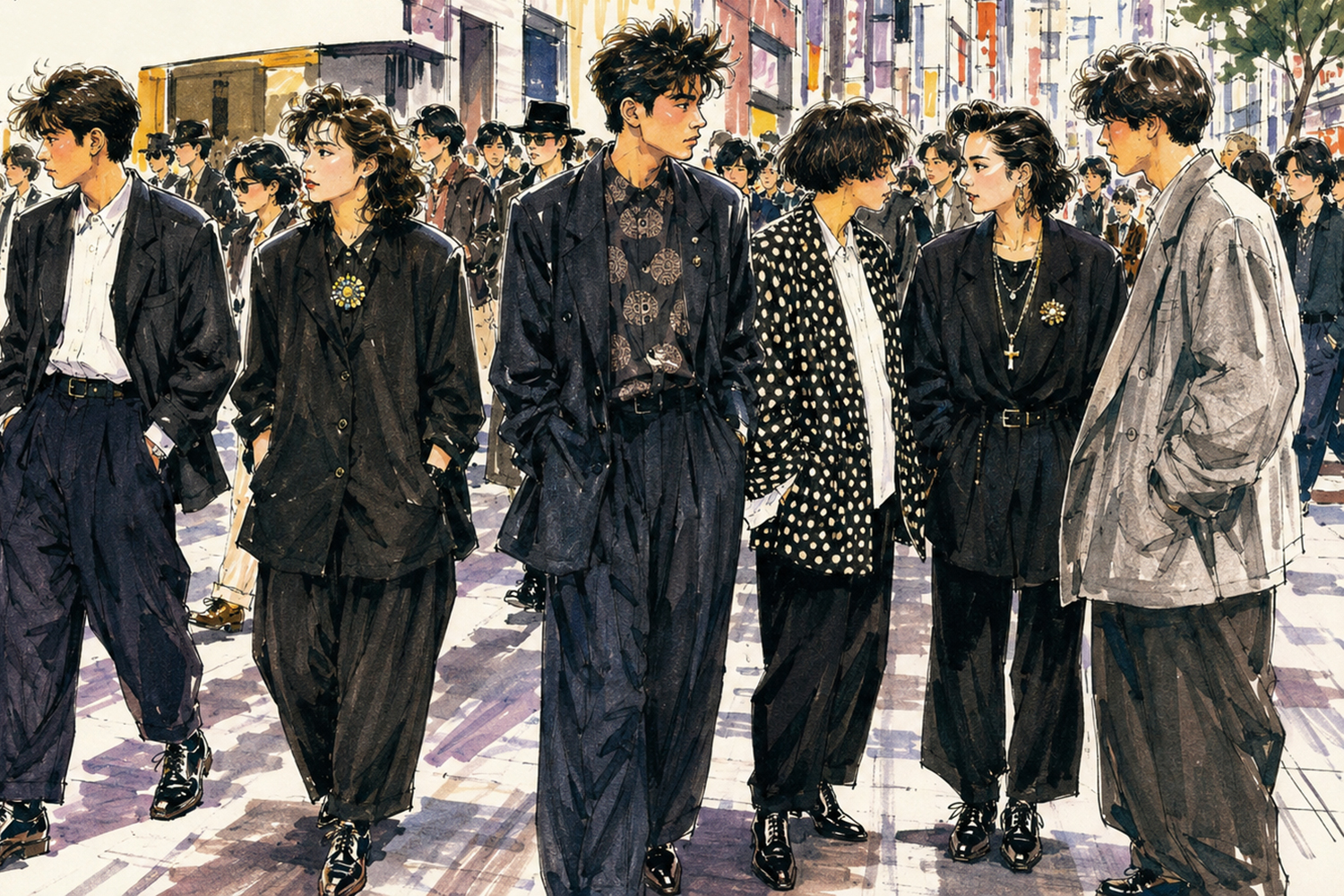
What Does "DC" Stand For?
At the time, "DC" was commonly understood to stand for "Designer's" and "Character's." "Designer's" referred to designer-led fashion, while "Character's" did not refer to cartoon characters or mascots — instead, it described brands with a strong identity, distinctive philosophy, and unique aesthetic created by the designer.
In other words, DC Brands were labels defined not only by their clothing, but also by the creative vision and individuality of the designer behind them.
Why Did DC Brands Become So Popular?
During the 1960s and 1970s, fashion trends in Japan were largely shaped by department stores and major apparel manufacturers. At the time, fashion was less about which brand you wore and more about wearing the latest trends.
That began to change in the 1970s, when ISSEY MIYAKE started gaining international recognition, followed by the Paris Fashion Week debuts of COMME des GARÇONS and Yohji Yamamoto in the early 1980s. Their success on the global stage transformed the perception of Japanese fashion and sparked a new era for designer brands in Japan.
How Did DC Brands Change Japanese Fashion?
The DC Brand movement changed the way people thought about fashion. Instead of simply wearing a brand, people began embracing the philosophy and values of the designer behind it.
More than just a fashion trend, DC Brands represented a cultural shift. A designer's vision, creativity, and beliefs became part of the brand's identity, and consumers chose brands whose ideas and aesthetics resonated with them.
Iconic DC Brands
There has never been a single official definition of "DC Brands." The following are some of the brands and designers most commonly associated with Japan's DC Brand movement.
Is the Term "DC Brands" Still Used Today?
Following the collapse of Japan's economic bubble in the 1990s, the market for high-end designer fashion changed dramatically. The arrival of international luxury brands, the rise of select shops, and later the rapid growth of fast fashion in the 2000s gradually brought the DC Brand boom to an end.
Although the term "DC Brands" is rarely used today, the movement's influence continues to shape contemporary fashion. The idea of valuing a designer's philosophy and creative vision remains deeply rooted in the industry.
Brands such as COMME des GARÇONS, Yohji Yamamoto, and ISSEY MIYAKE continue to receive worldwide recognition, while their archive pieces from the 1980s and 1990s are highly sought after by collectors and vintage fashion enthusiasts around the world.
FOLLOW US ON


SHIPPING
 FAQs
FAQs
 CONTACT US